For families in Ghana · Fill-in PDF

Leave your family everything they’ll need, in one file — in one weekend. Even if today your papers are in drawers, on your phone and only in your head.

A guided file that shows your family where every paper is, who to call first and what to do in the first 72 hours, the first 14 days and the first year — with the papers the court and the bank ask for. No apps, no passwords written down and no changes to your will.

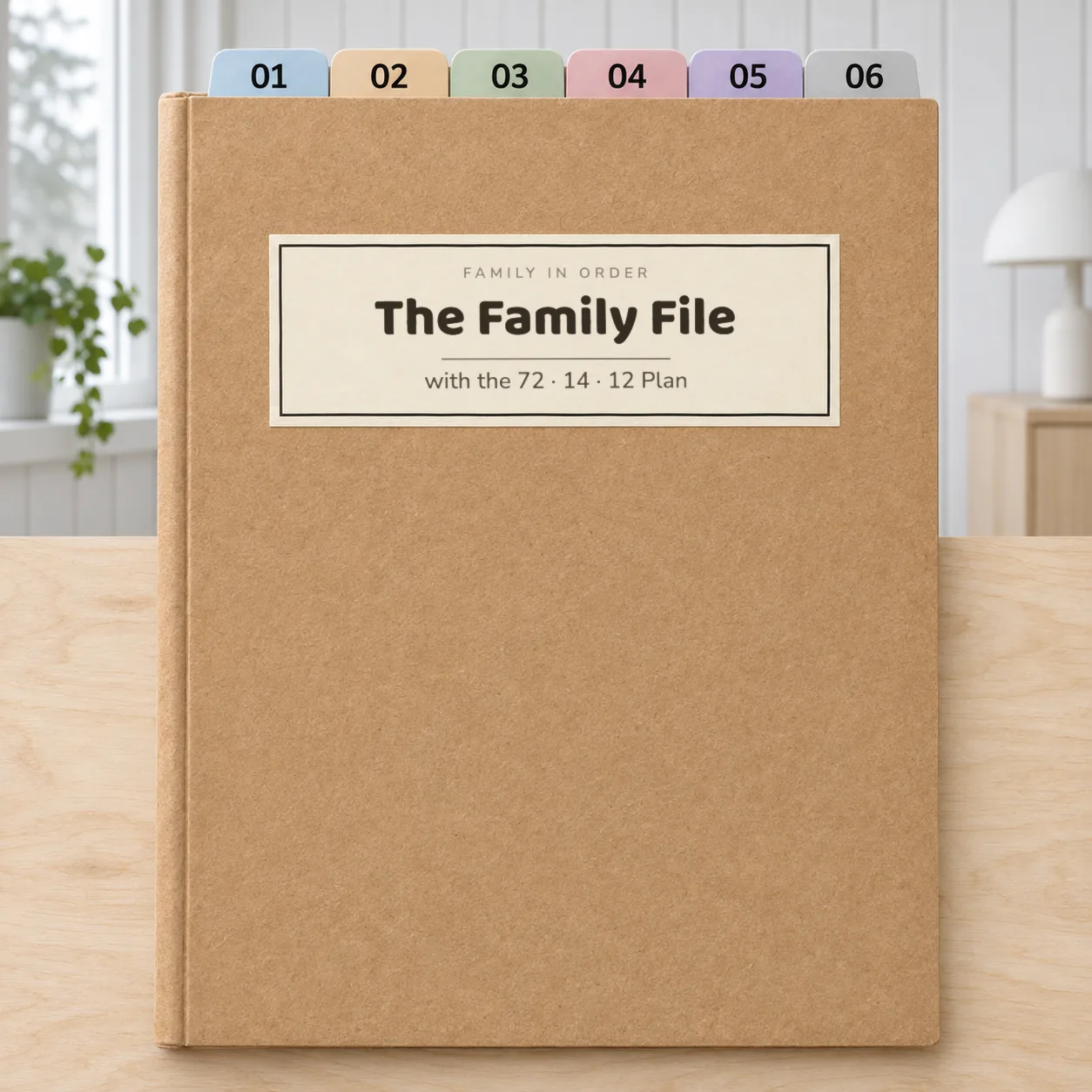
The Family File: a cardboard box file with numbered dividers on the table

One payment · $10 · 60-day guarantee · Start Guide by email straight away

Yes, I want The Family File →
  • 10chapters with questions that guide you
  • 72 · 14 · 12the plan for afterwards — already included
  • GHmade for Ghana, with the papers for the probate court
  • 60days, The One Weekend Guarantee

Does this sound familiar?

If you recognise yourself in one of these, this file is for you.

01

Only you know where everything is.

The land documents are “somewhere in a file”, the group life cover is with an insurer nobody remembers, and nobody else knows your MoMo PIN or the PIN of your phone. If something happens tomorrow, your family starts from zero.

02

You’ve seen what happens when nothing is written down.

Months of back and forth at the court, a bank account frozen in the same week, “come back with this document” — and the question everyone asks: “Where are the papers?” You’d like your family to be spared all that.

03

At home, each of you knows only half.

One of you deals with the landlord, the school fees and the susu; the other knows the doctor, the NHIS card and where the land documents are. Forty years together — and the full picture isn’t written down anywhere.

04

For years you’ve been telling yourself: “I’ll do it one day.”

You tried with a notebook, a file on the computer or a checklist from the internet… and stopped halfway. Because nobody told you what goes where, and in which order.

What changes once it’s all on paper

What your family gains — and what you no longer have to carry alone.

01

You’re no longer the only one who knows where everything is.

It’s all in one file, ready when it’s needed.

02

Your family knows where to start in the first 72 hours.

One sheet, three stages, the offices by name — and The After Guide, with tick-box checklists. Nobody has to guess.

03

One trip to the court, not three.

On the back of the sheet are the papers the court and the bank may ask for. Your family arrives with the file complete — no second trip for a missing document.

04

Done in one weekend, not over months.

Three one-hour sessions, with questions that guide you: just answer what you already know.

05

You both know the same things.

Banks, MoMo and the credit union, SSNIT and your Tier 2 scheme, policies, the house and the land, the rent: what only one of you knows today, you’ll both know.

06

You sleep knowing it’s done.

You’ve done for your family what almost nobody does. And in a year, 15 minutes is enough for the yearly check.

The idea behind the file

A will says who inherits. It doesn’t tell your children what to take to the court.

When the time comes, nobody looks for the will first. The family looks for the indenture, the bank statements, the SSNIT number, the insurance policy and the PIN of the phone. In almost every family there’s one person who knows where everything is. When that person is gone, the others are left with half a plan.

In Ghana, the clock starts straight away. There’s no burial without a burial permit, and every office asks for the death certificate from the Births and Deaths Registry. Banks freeze the accounts as soon as they learn of the death, and release the money only against a Grant of Probate or Letters of Administration from the High Court. SSNIT, the Tier 2 trustee, the credit union and the Lands Commission each ask for their own papers, and the family head usually has to sign too. Most families only find all this out once the clock is already running.

It’s not your fault you haven’t got round to it. Anyone who tries to write it all in a notebook usually stops halfway, because nobody gave them the questions in the right order, the steps and the letters. What’s missing is a plan. With a plan, it takes a weekend.

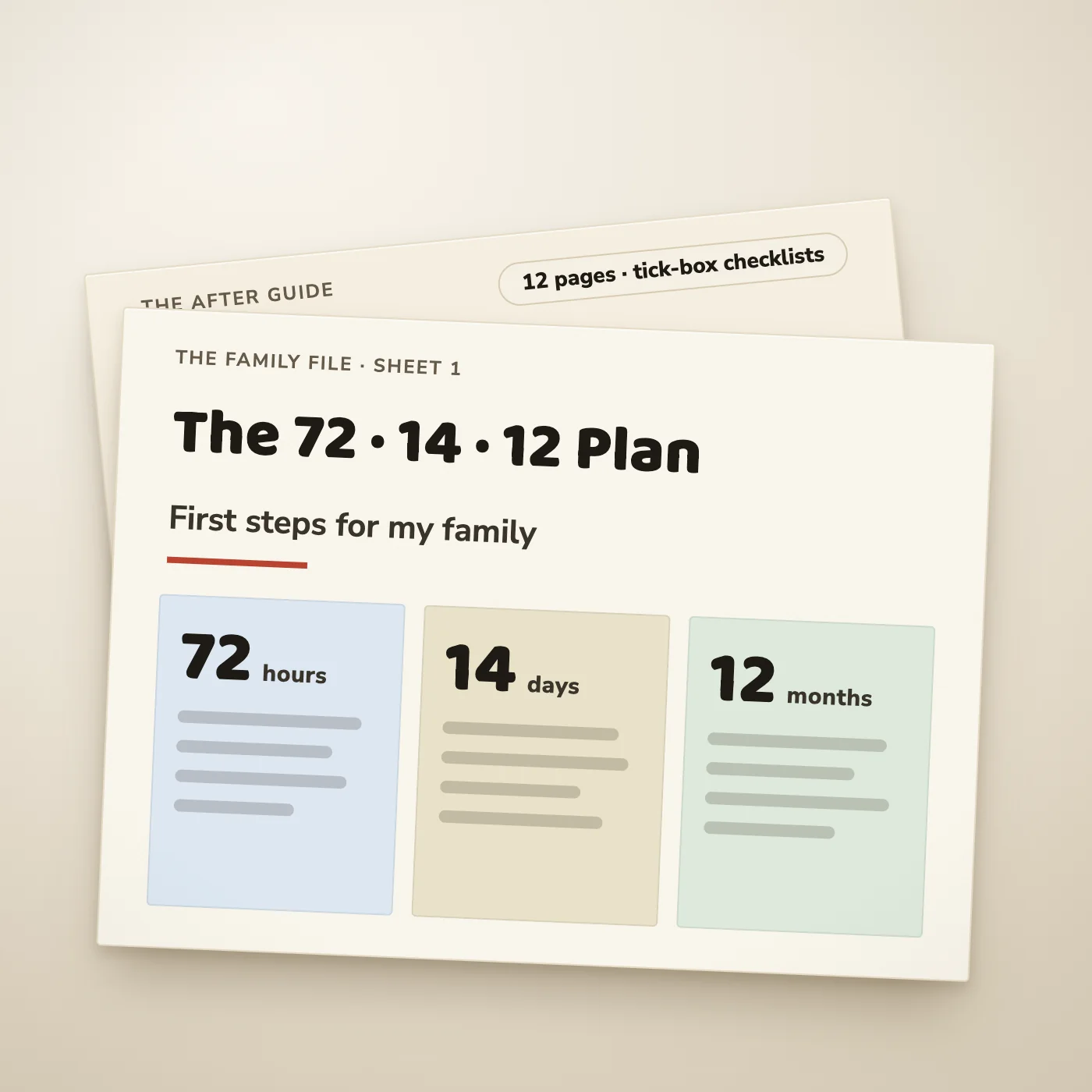
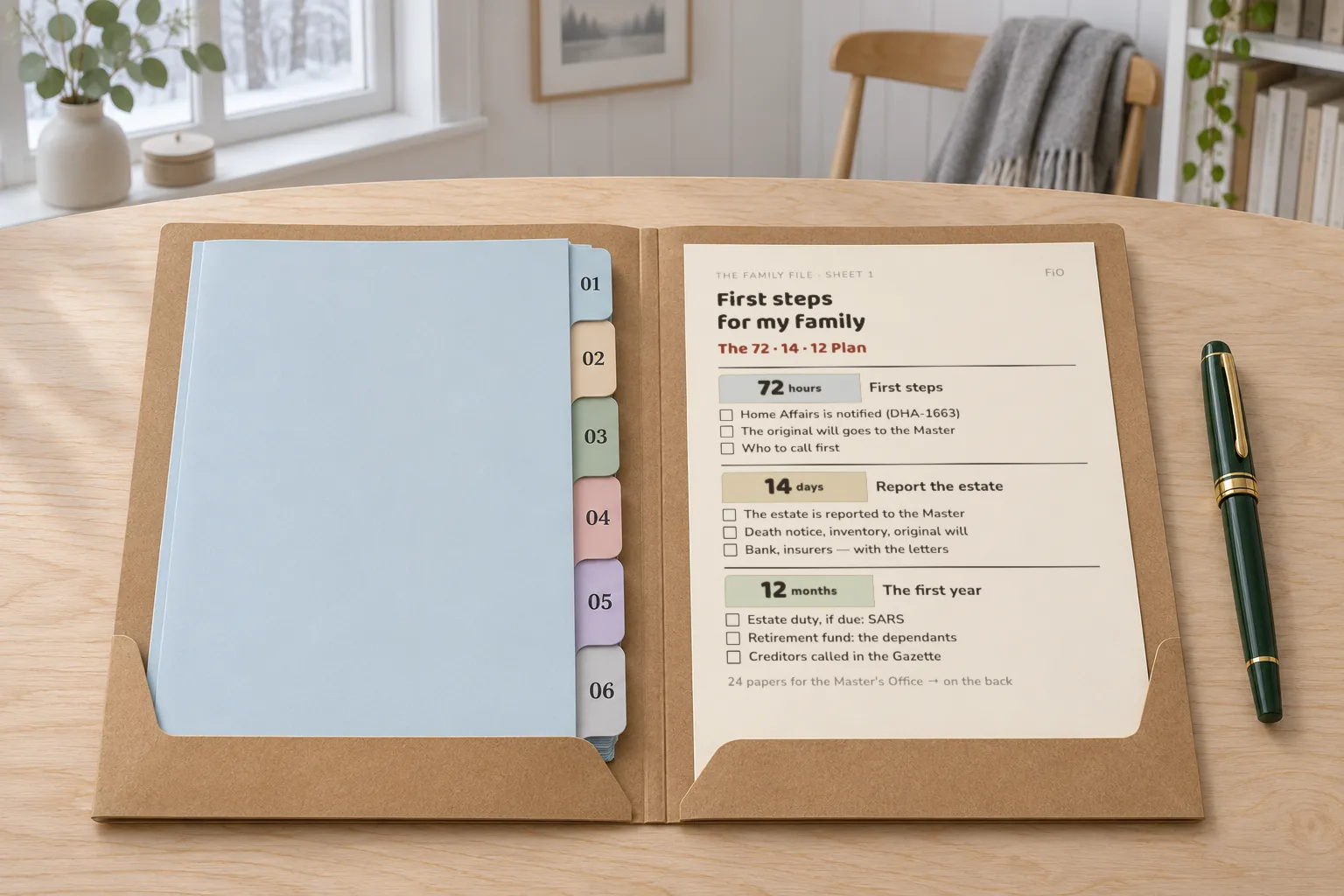
The Family File, open at the sheet “First steps for my family”

The plan for afterwards — included in the price

The 72 · 14 · 12 Plan: the three stages your family will face — on one sheet.

This isn’t legal advice. It’s the list in the right order, with the offices and papers that matter in Ghana. Plus The After Guide, 12 pages of tick-box checklists — not an extra, already included.

72hours

First steps

  • The hospital’s medical certificate of cause of death and the burial permit — then the death certificate from the Births and Deaths Registry
  • The original will: where it is and who holds it — nobody opens it at home
  • Who to call first: family, the family head, your pastor or imam, your lawyer — the numbers and what to say
  • Your burial wishes, written down — for Muslim families, burial is usually within 24 hours
14days

Secure the estate

  • The bank, SSNIT, the Tier 2 trustee, the credit union, the employer and the insurers are told — with the letters ready-made
  • Banks freeze the accounts once they know: what your family needs for the burial and the house in the meantime
  • The land and house documents — indenture, site plan, land title certificate — kept safe: originals, not photocopies
  • The family meeting with the family head: who applies to the High Court, and with which papers
12months

The first year

  • The application to the High Court: a Grant of Probate (with a will) or Letters of Administration (without one) — it often takes months
  • SSNIT pays the lump sum to the dependants you nominated, and the employer’s group life cover pays out — if your family knows to claim it
  • The house and the land pass to the heirs by a vesting assent, registered at the Lands Commission
  • The rent, the tenants, the car, the school fees — what comes next

You give the sheet to the person who will take care of everything. On the back: 24 papers the court and the bank may ask for. In The After Guide: each stage, with its own checklist.

Myths and what the law says

Six things people often say — and what Ghanaian law actually says.

In short, with the law or the case. This isn’t legal advice: for your situation, ask a lawyer or the High Court registry.

01

“My wife is my next of kin at the bank, so the money goes straight to her.”

Not automatically. “Next of kin” on a bank or work form is a contact person, not an heir. The bank releases the money only to the executors or administrators named in a Grant of Probate or Letters of Administration.

Administration of Estates Act 1961 (Act 63)

02

“In our family, daughters don’t inherit — that’s our custom.”

No. Under the Intestate Succession Law, the children share equally — daughters and sons alike — and the Constitution forbids any custom that shuts a daughter out because she is a woman.

PNDCL 111 · Art. 17 and 22 Constitution of Ghana 1992

03

“A will I typed and signed myself is valid.”

Only if you sign it in front of two witnesses present at the same time, who sign it too. And a witness — or the witness’s spouse — who also gets something in the will can lose that gift.

s2 Wills Act 1971 (Act 360)

04

“The will we find at home, we just read as a family.”

The original will is read and proved at the High Court with the application for probate, before anything is shared. A photocopy isn’t enough — and if the original can’t be found, your family may have to proceed as if there were no will.

Wills Act 1971 (Act 360) · High Court (Civil Procedure) Rules, Order 66

05

“The house is ours — it doesn’t matter whose name is on the indenture.”

It matters. The house and the land pass to the heirs by a vesting assent from the executors or administrators, registered at the Lands Commission. If the papers are still in a late grandparent’s name, the family has to sort out that estate first.

Land Act 2020 (Act 1036) · Lands Commission

06

“My SSNIT money goes into the estate with everything else.”

No. The SSNIT lump sum is paid to the dependants you nominated — so the nomination form matters, and it should be up to date. And many families never claim the employer’s group life cover, because nobody knows the insurer.

National Pensions Act 2008 (Act 766)

In The Family File, each of these questions has its own line — so you answer them today, not your family later.
How it works

Three steps. One weekend. And you start with a single page.

01

It arrives by email.

The Start Guide comes straight away. The complete file, adapted for Ghana, arrives as a PDF within 48 hours. Fill it in on your computer, or print it and write by hand.

02

Start with a single page.

Chapter 02, “Who to call first”, takes ten minutes — and your family already has the most important part. The rest you do in three one-hour sessions: Friday evening, Saturday morning, Sunday afternoon.

03

Hand over the sheet.

Tell your family where the file is and give them the “First steps” sheet. Done.

What you get

Everything inside your file.

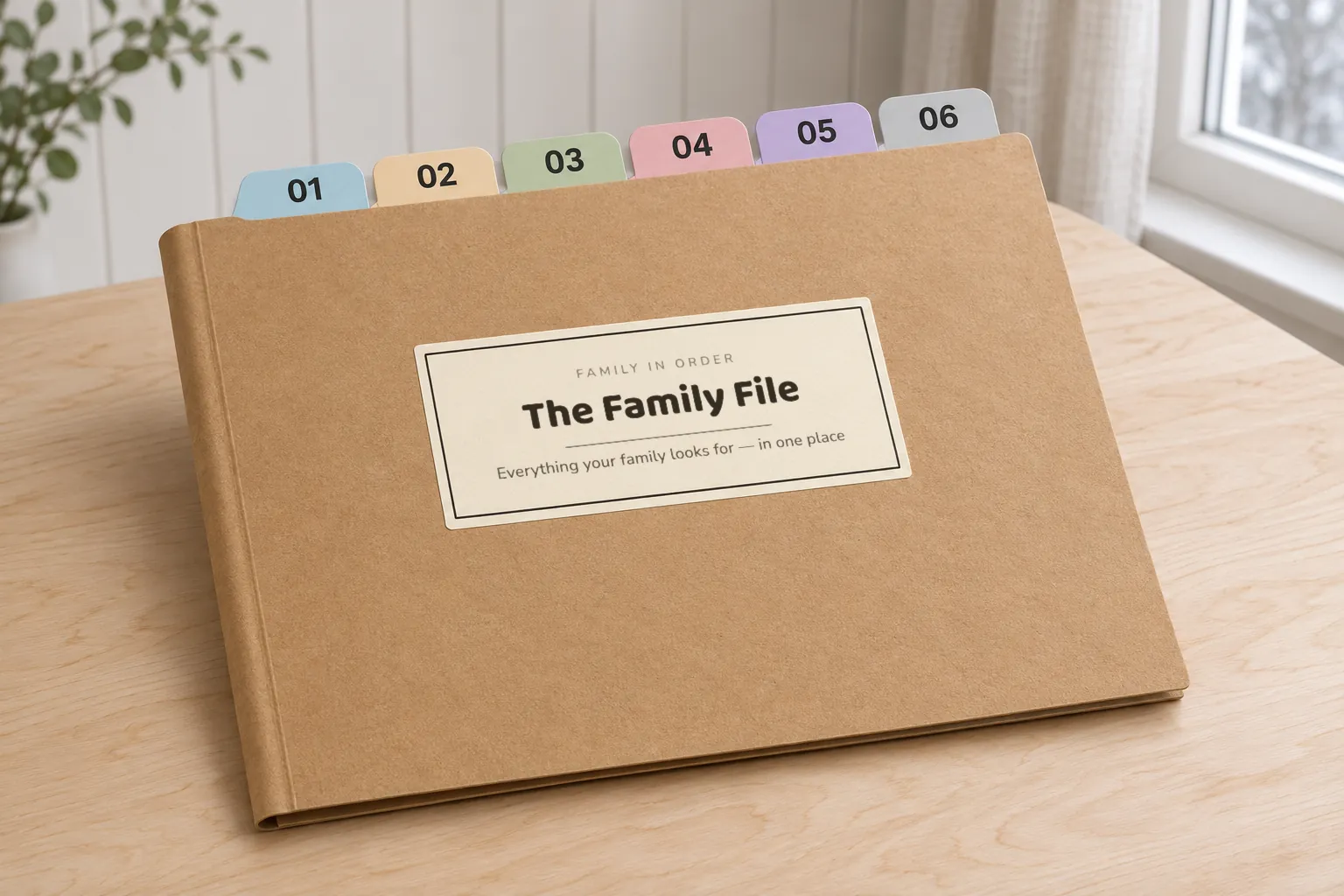
01PDF · 10 chapters · about 48 pagesThe Family File: a cardboard box file with numbered dividers

The Family File

Ten chapters of questions: papers and documents, who to call first, accounts and banks, your SSNIT, Tier 2 and insurance (with group life), the house and the land (and whose name they’re in), rent, school fees and standing orders, digital life (where the passwords are, never what they are), health, the NHIS and your medical cover, the burial and final wishes, and the “Done” list. Every page tells you what to write. No blank pages.

02Sheet · 2 pages + The After Guide · 12 pagesThe 72 · 14 · 12 Plan: the sheet “First steps for my family” and The After Guide

The 72 · 14 · 12 Plan — the plan for afterwards

The sheet “First steps for my family”: what to do in the first 72 hours, the first 14 days and the first year, at which office and with which papers — and on the back, 24 papers the court and the bank may ask for. Plus The After Guide: a checklist for each stage, and what comes after. Included in the price.

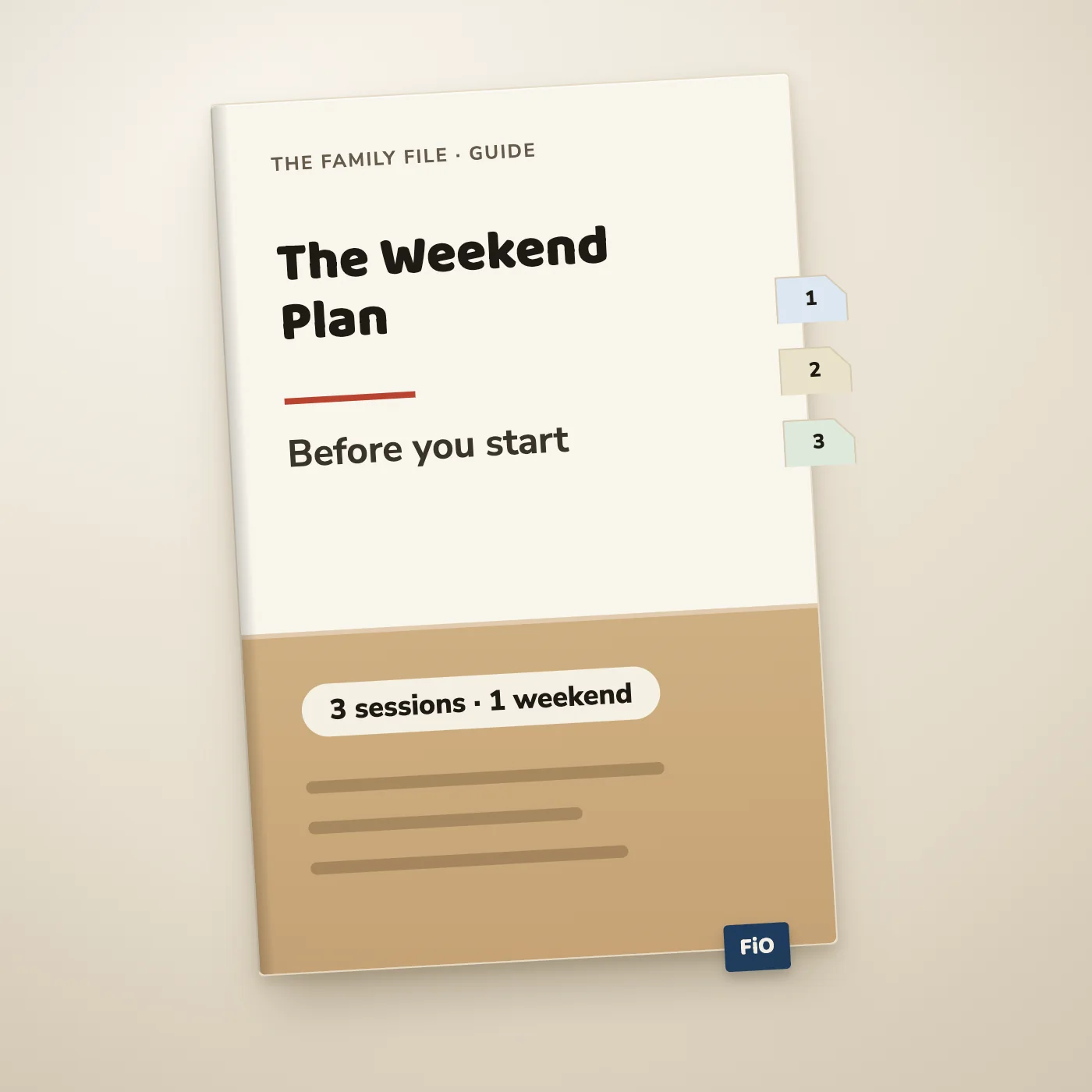
03Guide · 8 pagesThe Weekend Plan: the guide “Before you start”

The Weekend Plan

The guide “Before you start”: the five most common mistakes when people try alone, the page to start with, and three one-hour sessions, with what to fill in during each one.

A look inside

The pages you fill in.

Pages from the PDF — fill them in on screen or by hand. These aren’t marketing images: this is exactly what you get.

01 · Where every paper is
02 · Who to call first
03 · Accounts and banks
04 · Pension, policies and beneficiaries
07 · Digital life without passwords
The sheet “First steps for my family”

Today, 4 gifts are included in the price

Four gifts for what would otherwise stay unresolved.

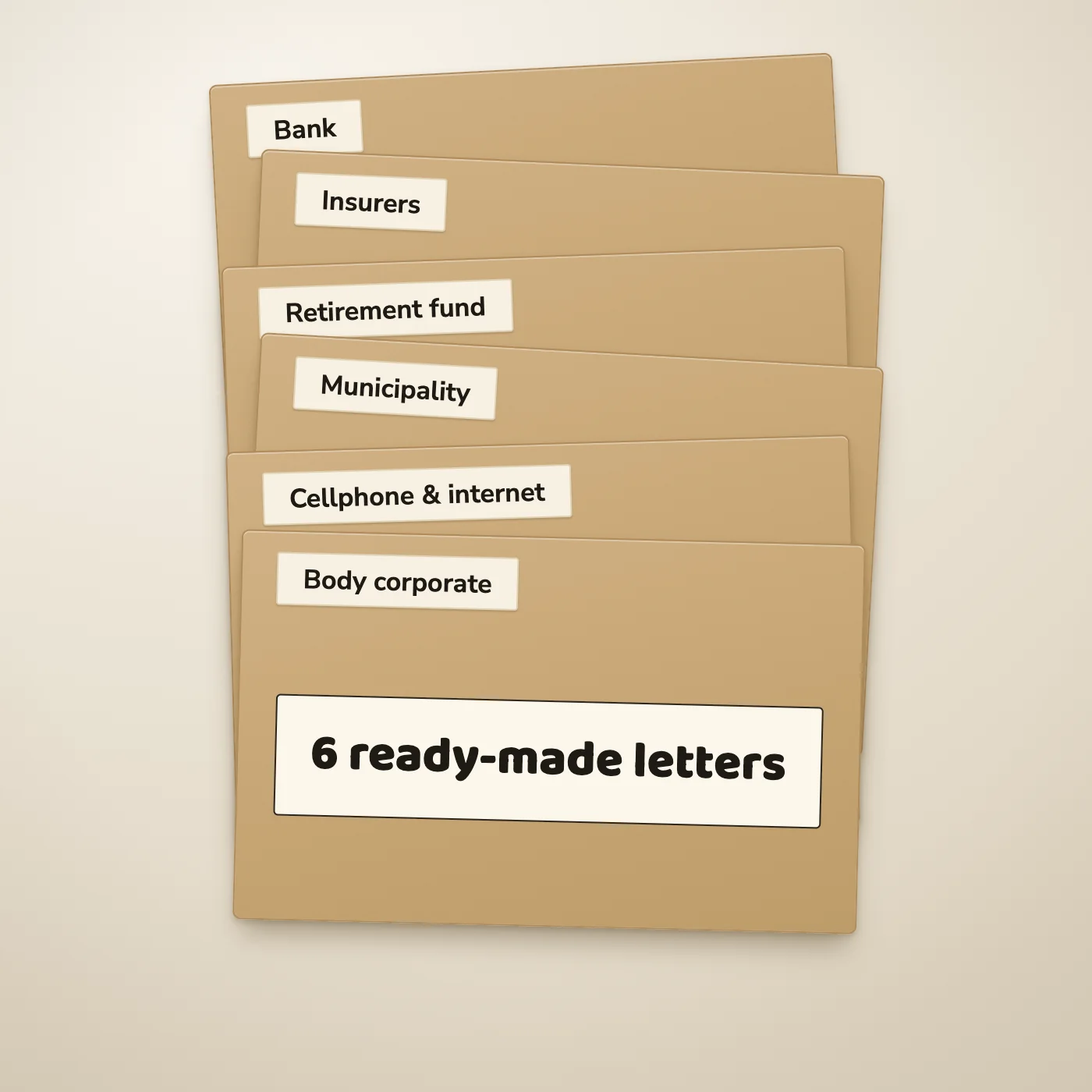
Gift 1Gift 1: 6 ready-made letters, in envelopes

6 ready-made letters

For the bank, SSNIT and your Tier 2 trustee, the employer and its group life insurer, your life insurer, the credit union, the landlord or the tenants, and ECG, the phone, internet and DStv or GOtv. Just fill in the details.

Value $3.50 included in today’s price

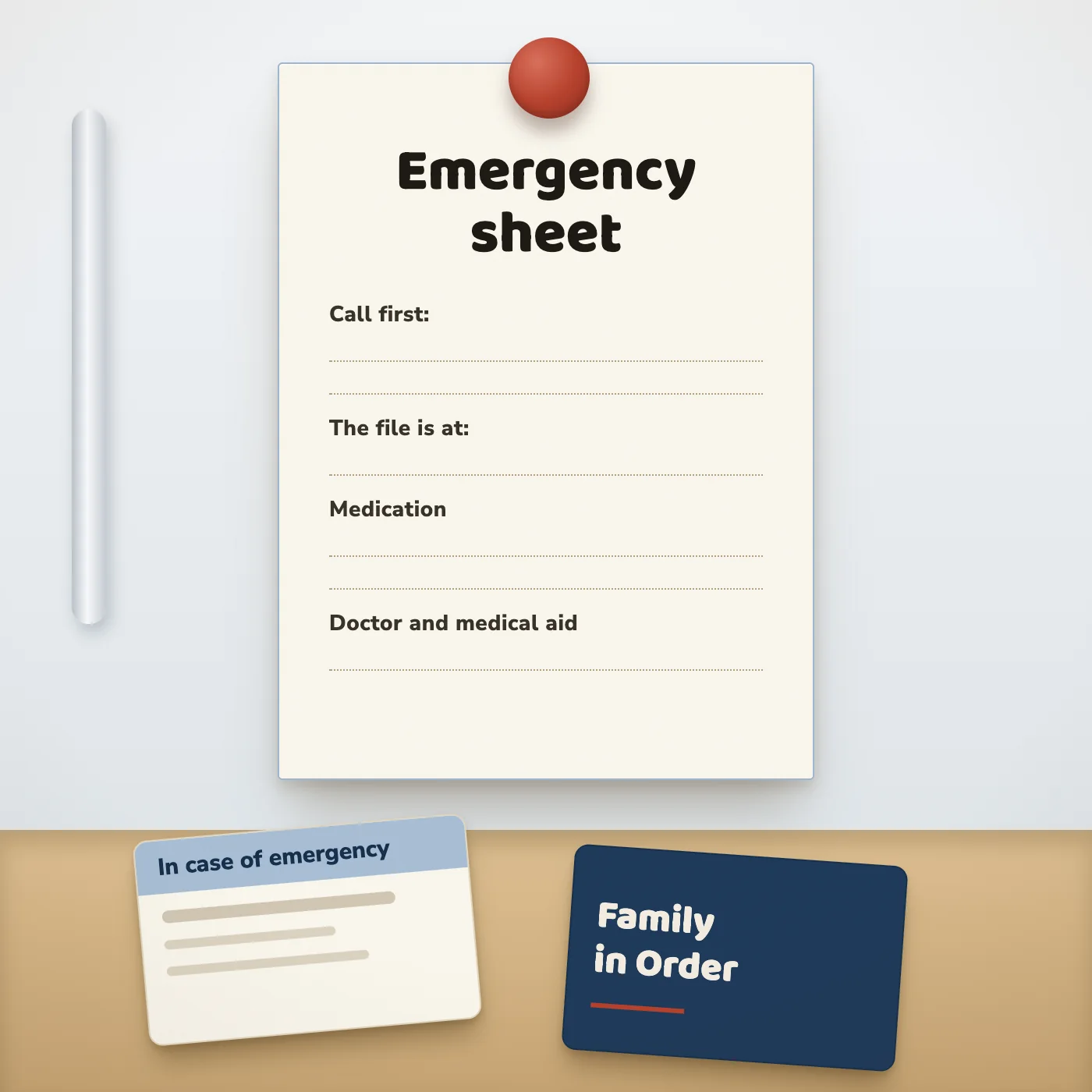
Gift 2Gift 2: the emergency sheet and two wallet cards

Emergency sheet + 2 wallet cards

A sheet for the fridge door and two cards for your wallet, with what matters most: who to call, where the file is, medication, your doctor and your NHIS card. Useful from day one.

Value $2 included in today’s price

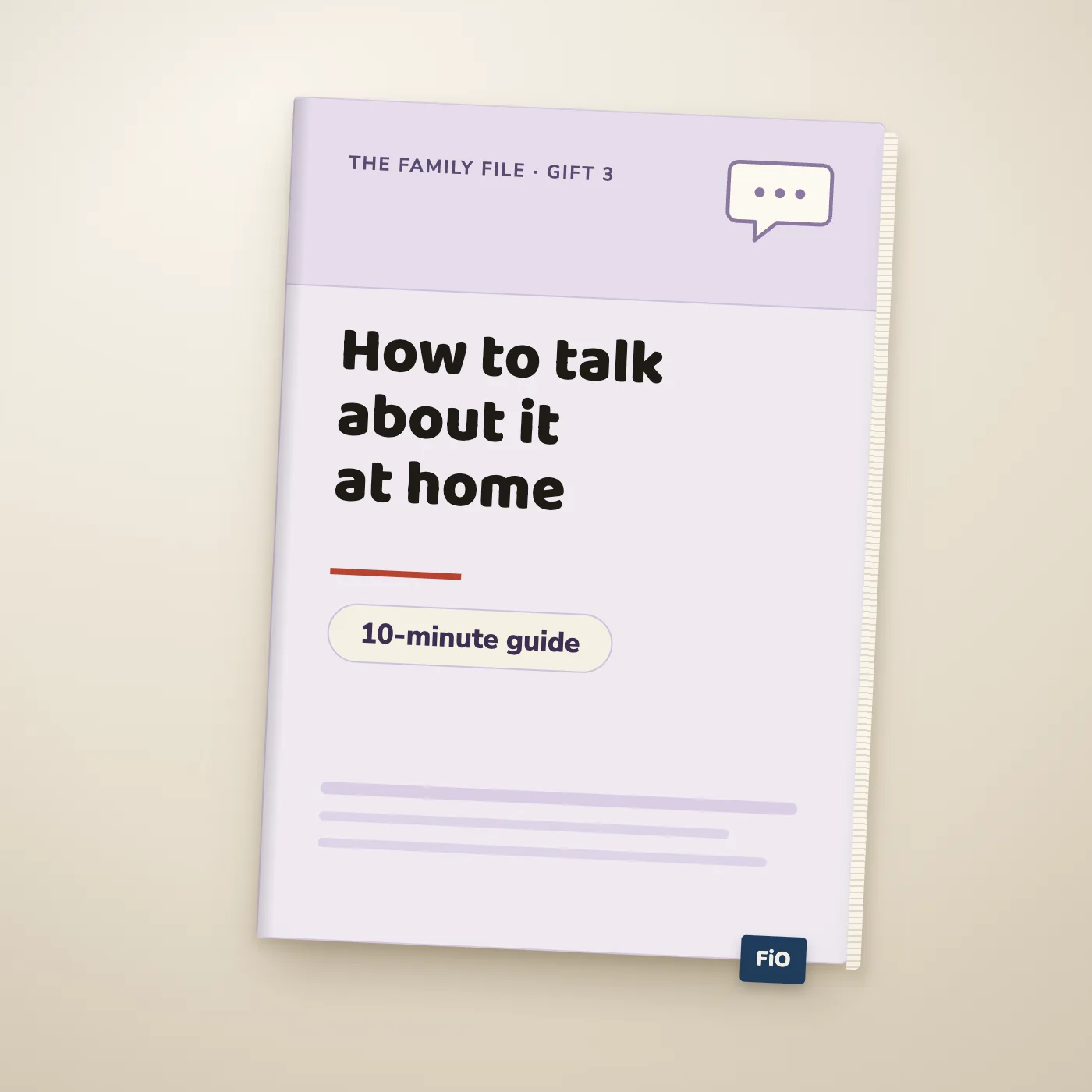
Gift 3Gift 3: the guide “How to talk about it at home”

How to talk about it at home

A 10-minute guide, word for word, to tell your family that the file exists and where it is. With a page for children who want to give it to their parents — on the phone or a video call too, if they live abroad.

Value $2.50 included in today’s price

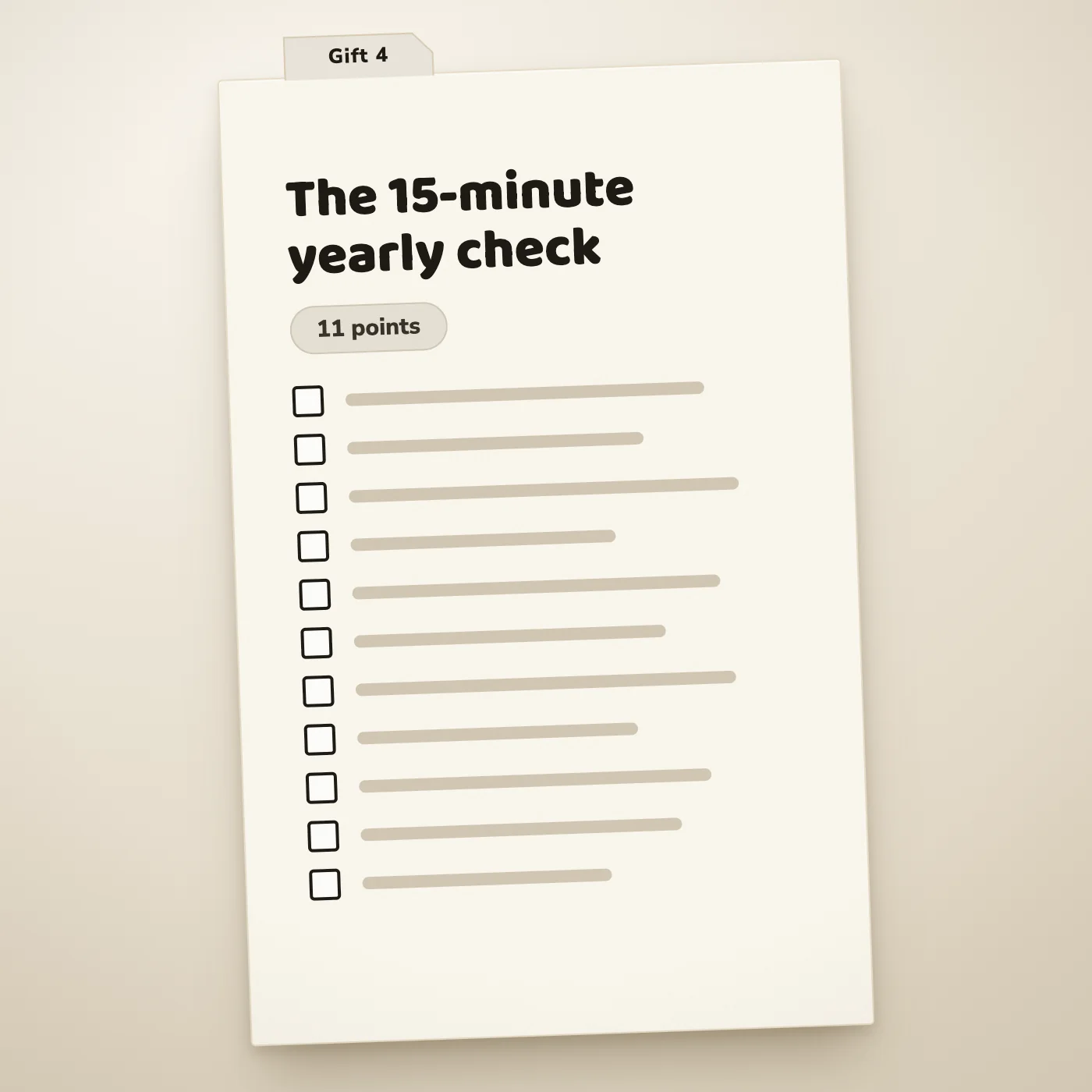
Gift 4Gift 4: the sheet “The 15-minute yearly check”

The 15-minute yearly check

Eleven points to run through once a year (new bank, new policy, new phone, a new credit union) without rewriting anything. Best done every January.

Value $1.50 included in today’s price

Value of the gifts: $9.50. Included today in the price of the file, at no extra cost.

★★★★★ 4.9 out of 5 · From people who have already filled in their file

What families who already have the file say.

“When my father died, it took us four months to find all his papers — including a group life policy from his old employer that nobody knew about. I bought the file so my children never go through that. I filled it in over one weekend, exactly as it says.”

Akosua, 63 · Kumasi · retired teacher

“I always handled the money at home; my wife only knew half. We sat down on Friday evening, and by Sunday everything was in one file — the accounts, the credit union, the plot in Ho. The best conversation we’ve had in years.”

Kwame, 68 · Cape Coast · retired civil engineer, married 41 years

“In our family, burial is within a day. There’s no time to look for anything. The ‘First steps’ sheet says who to call and where every document is, so my children won’t be searching drawers while they grieve.”

Fatima, 54 · Tamale · pharmacist

“I bought it for my parents. I live in Houston, so I filled it in with my mum on video call, chapter by chapter. The page for children helped me raise the subject without it sounding like an order. Now I know who to call first.”

Kojo, 42 · Accra · son, bought the file for his parents

“My husband had a will, and still it took us fourteen months. The bank froze his account in the first week, and the land in Kasoa turned out to be still in his late father’s name. Now my file tells the children what to take to the High Court, and in which order.”

Adwoa, 66 · Koforidua · widow, mother of four

“My daughter lives in London. I printed the PDF, put it in a proper box file with dividers, and sent her a photo of the ‘First steps’ sheet on WhatsApp. The 15-minute yearly check was exactly what I was missing.”

Yaw, 71 · Takoradi · retired banker

Other routes, compared fairly

You can do this other ways too. Here’s what each route does well.

Free “what to do when someone dies” checklists online

Good for:

knowing what the High Court asks for, in general.

What’s missing:

where your papers are — accounts, the SSNIT, policies, the house, the land, the phone — and the plan for afterwards, step by step.

A lawyer, your bank or an executor

Good for:

drawing up a will, applying for probate or letters of administration and transferring the house or the land. For those, you need a professional.

What’s missing:

They don’t know which cupboard the indenture is in. The file gets the papers ready for them.

Your own list, in Word or a notebook

Good for:

getting started. It costs nothing.

What’s missing:

the questions in the right order. Most people stop halfway.

The Family File

What it does:

everything in one place, with questions that guide you — plus the 72 · 14 · 12 Plan for afterwards, 6 ready-made letters and a sheet to hand over. Made for Ghana, priced in US dollars.

What it isn’t:

it isn’t a will and it isn’t legal advice. Many people use it alongside their lawyer or their bank.

Everything in one package

The Family File — with the 72 · 14 · 12 Plan

The Family File: a cardboard box file with numbered dividers
  • The Family File — PDF with 10 chapters ($12)
  • The 72 · 14 · 12 Plan — sheet + The After Guide ($7)
  • The Weekend Plan — guide ($3)
  • Gift 1 — 6 ready-made letters ($3.50)
  • Gift 2 — Emergency sheet + 2 wallet cards ($2)
  • Gift 3 — How to talk about it at home ($2.50)
  • Gift 4 — The 15-minute yearly check ($1.50)

Value of everything inside: $31.50

You pay today

$10

All 7 pieces for $10 — the plan for afterwards is already included

★★★★★ 4.9 out of 5

Yes, I want The Family File →

One payment · Start Guide straight away · the complete file within 48 hours · 60-day guarantee

The 4 gifts are included in the price for the next 15:00 minutes only. After that the price stays the same — the gifts just aren’t included any more.

Secure card payment · Confirmation by email

A few words from the woman who made the file

“I made this file after fourteen months with my father’s papers. He had a will. But nowhere did it say which bank had his savings, that the house in Sunyani was still in my grandfather’s name, that his old employer had a group life cover for him — or what the PIN was on the phone with all our photos. I went to the High Court registry three times for one missing document after another, and the bank froze his account in the first week. I didn’t want my own children to go through that. And I realised: it isn’t goodwill that’s missing. It’s the questions in the right order, and the steps that matter in Ghana, on a single sheet. That’s exactly what you get here.”

Efua M. · Tema

The One Weekend Guarantee

60 days to try it. The risk is ours.

Fill in the file over one weekend and show the “First steps” sheet to someone in your family. If that person doesn’t know where to start, email us within 60 days of purchase and we’ll refund every cent. You keep the file.

Frequently asked questions

No. A will says who inherits; the file shows your family where everything is and what to do. In chapter 01 you write down where the original is — because the original will goes to the High Court, and a photocopy isn’t enough.

No. In chapter 07 you note where they’re kept and who knows how to get to them — never what they are. Nothing leaves your home: it’s a PDF that stays on your computer or in your printed file.

Yes. A house or a plot of land, one bank account and SSNIT are already three places where someone has to turn up with the right papers — and even a small account stays frozen until someone holds a Grant of Probate or Letters of Administration. Fill in only what applies to you; leave the rest blank.

Yes: the burial permit and the Births and Deaths Registry, the family head, Grant of Probate and Letters of Administration from the High Court, SSNIT and your Tier 2 scheme, the credit union, MoMo, the indenture, the vesting assent and the Lands Commission — with the Wills Act 1971 (Act 360) and the Intestate Succession Law (PNDCL 111), priced in US dollars. It isn’t legal advice, it’s the list in the right order.

Yes. The kind of marriage and the rules your family follows change who inherits — one more reason to write things down. The file doesn’t decide who inherits: it asks which kind of marriage you have and where the papers are, and shows your family where everything is, whatever rules apply.

If there’s a will, the executors named in it apply to the High Court for a Grant of Probate. If there’s no will, close family apply for Letters of Administration — usually with the consent of the family head. Either way, the bank, SSNIT and the Lands Commission wait for that paper. The back of the sheet lists the papers the court may ask for, so your family doesn’t lose time looking for them.

The checklists tell you what the High Court asks for, in general. The file tells you where your papers are, what comes in the first 72 hours, the first 14 days and the first year, and gives you the letters ready-made. Many people use both.

The Start Guide arrives by email straight after payment. The complete file, adapted for Ghana, arrives as a PDF within 48 hours. Fill it in on your computer, tablet or phone — or print it and write by hand. Many people put it in a real box file, so it’s ready for the family.

Yes. Gift 3 has a page for children: how to suggest the file without it sounding like an order, and how to fill it in together — on a video call too. If the children are in London, Houston or Toronto, the file stays at home and you send them the “First steps” sheet as a photo or a PDF on WhatsApp.

You have 60 days with The One Weekend Guarantee. Email us and we’ll refund you, no fuss. You keep the file.

One weekend of your time spares your family months of searching, uncertainty and second trips to the High Court registry.

You already know everything that matters. All that’s left is to write it down — and here you get the guide, page by page.

The Family File · file + plan for afterwards + 4 gifts — Value of everything inside $31.50 · today $10

★★★★★ 4.9 out of 5

Yes, I want The Family File →

One payment · Start Guide straight away · 60-day guarantee

Today you write it down. Tomorrow your family knows where to start.